Inventions
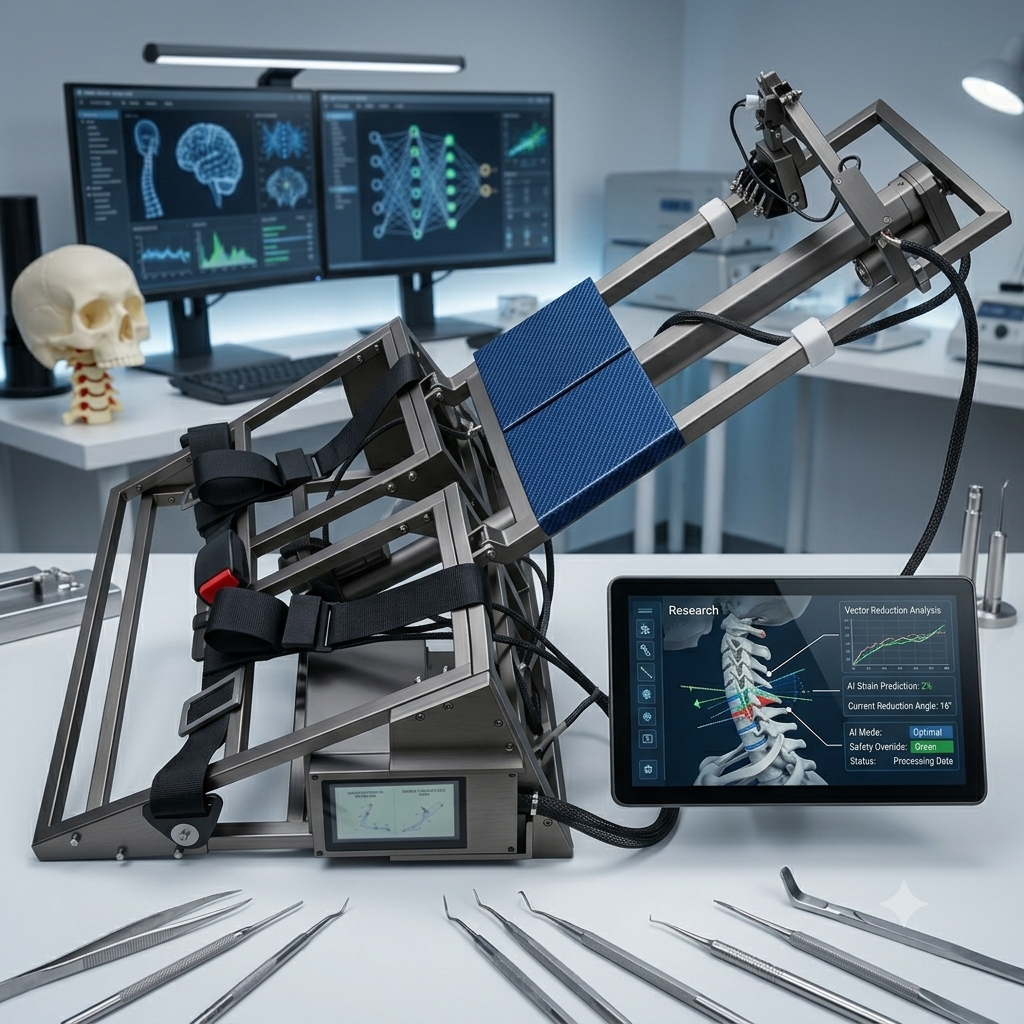

Modernizing Emergency Cervical Spine Alignment
The Clinical Problem
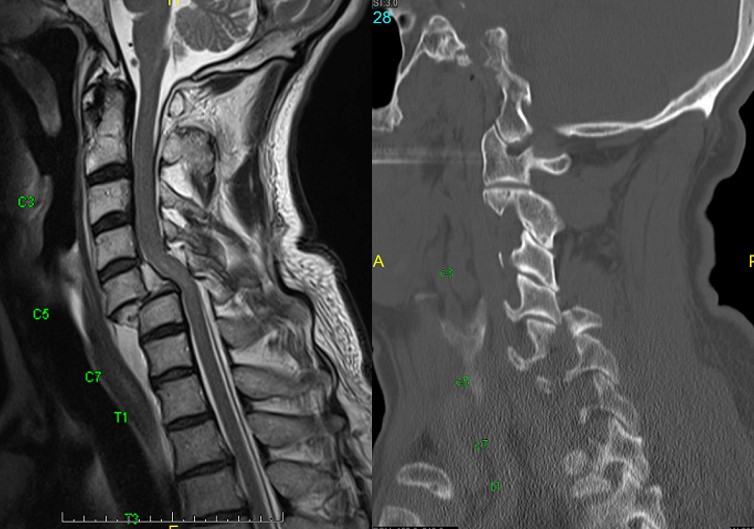
Severe Spinal Injuries
A cervical facet dislocation occurs when trauma causes vertebrae in the neck to slip out of alignment, compressing the spinal cord. If not treated rapidly, ideally within four hours, it can lead to permanent paralysis and quadriplegia.
Infrequent & Complex Procedure
Closed Cervical Reduction is a non-invasive procedure used to align the cervical using sequential weights and pulleys. Because these injuries are relatively rare, many emergency doctors seldom perform the procedure, and practical experience is limited. This procedure needs to be distinguished from the common physiotherapy traction procedure, where an “arthritic” or painful neck is given traction to relieve pain. This usually needs 5kg of traction, using a halter around the chin/head. With cervical dislocations, closed cervical reduction uses a steel clamp/pin construct onto the skull and weights up to 50kg.
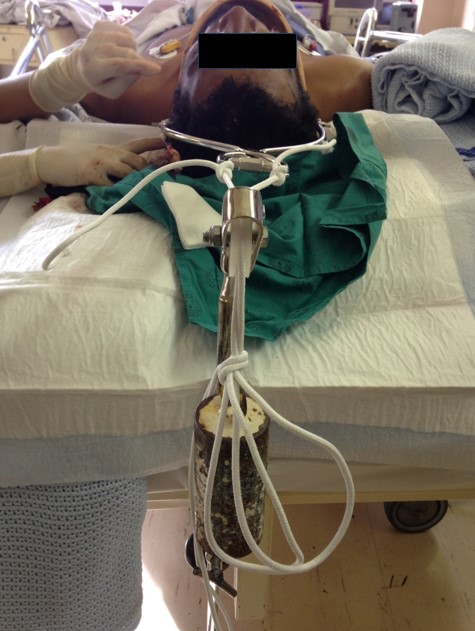
Outdated & Clunky Equipment
Traditional equipment relies on loose weights, pulleys, and specialized hospital beds that take an excessive amount of time to locate and set up in emergency settings.
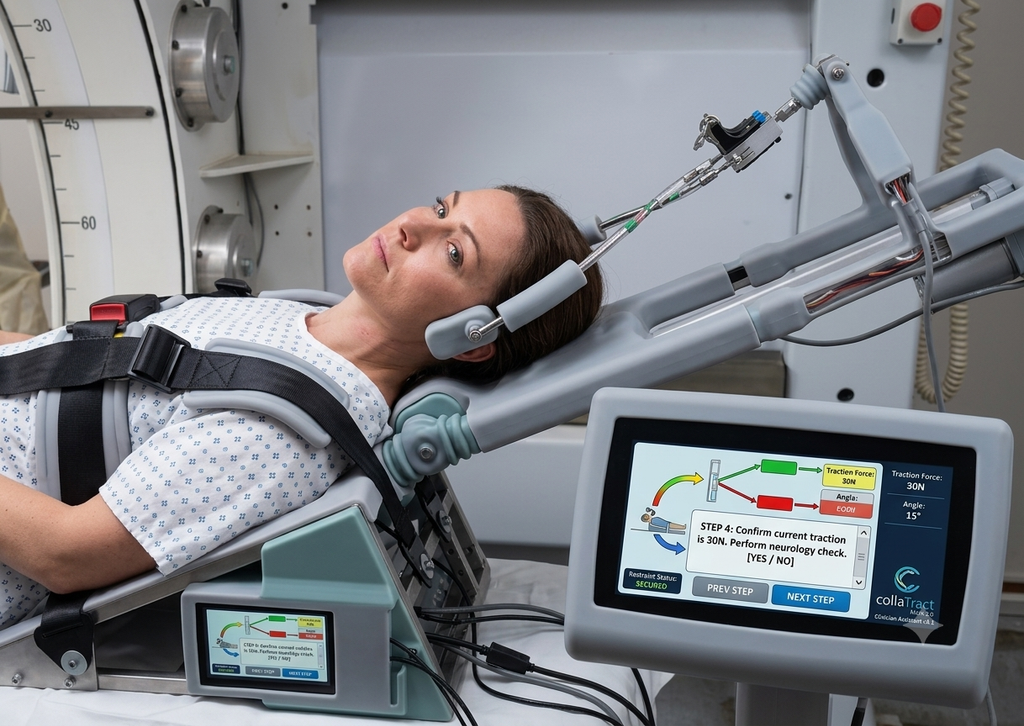
The semiautomated robotic reduction device is an all-in-one, portable traction device designed to replace complex weight-and-pulley systems. It guides doctors through cervical reduction procedures using precise electronic controls and semi-automation.
Validation & Usability Results
- Preclinical Cadaver Testing: Functional testing on cadaver models inside specialized imaging suites confirmed that the device successfully distracted vertebrae step-by-step while maintaining clear X-ray visibility.
- High System Usability (SUS) Score: Ten clinicians of varying experience levels tested the device alongside the traditional weight-and-pulley setup. All 10 participating clinicians rated the device as easier to use and an overall improvement over traditional reduction equipment.